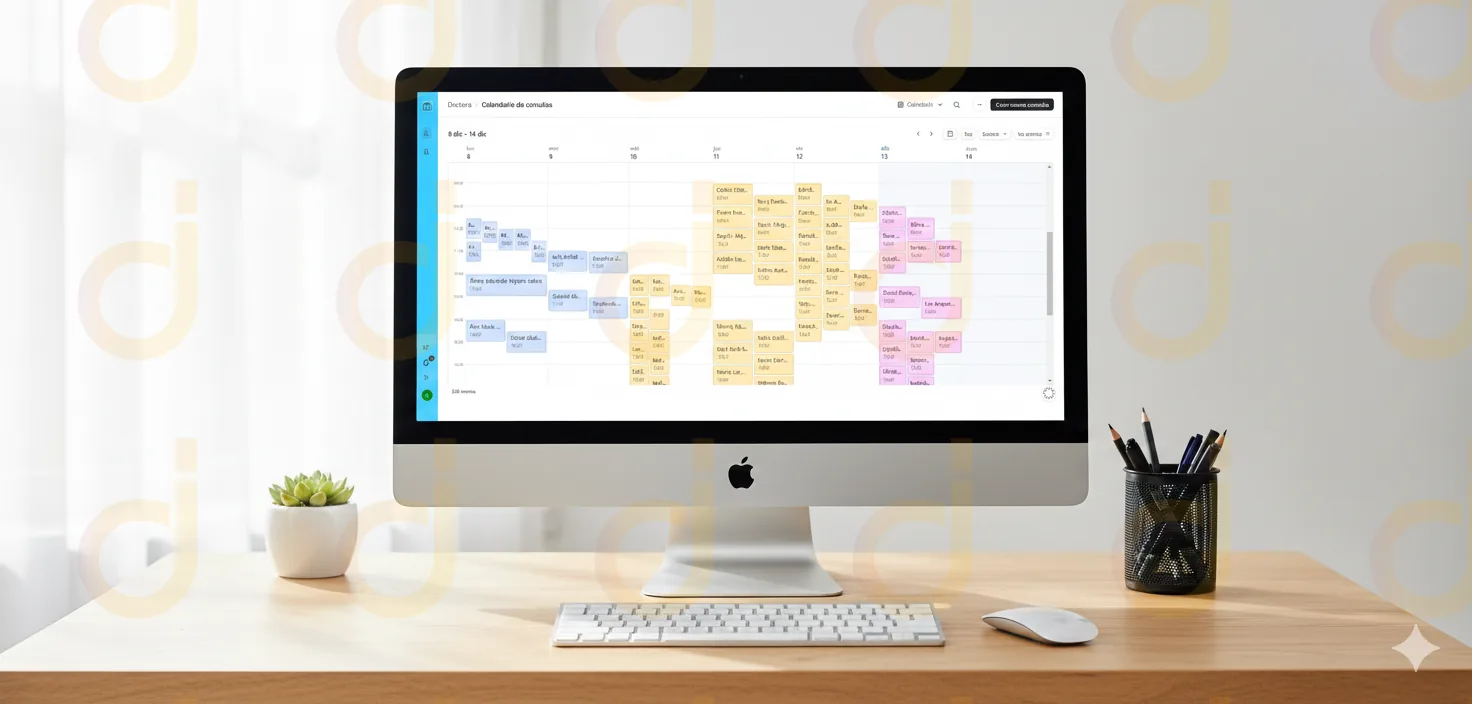
Representative scenario

A clinic that needs to organize patient follow-up and reduce manual work

Digital Strings built a custom web app for an anonymous chain of dermatology clinics with a pharmacy, 4 locations in Guatemala, and a growing operation.

Patient follow-up system · Clinic automation

The client is not named for confidentiality; the result is described without invented metrics, in terms of continuous adoption, daily use across the 4 locations, and growth alongside the platform.

Representative clinic digitalization scenario

Problem: a clinic chain needed to organize daily operations

The problem was that a dermatology clinic chain with a pharmacy, 4 locations in Guatemala, and a growing operation needed a platform adapted to its real processes.

When a clinic grows, complexity does not appear only in medical care. Scheduling, appointments, quotes, prescriptions, records, inventory, pharmacy operations, clinical images, and coordination among users with different responsibilities all grow as well. In a single location, many workflows can survive through informal agreements; across 4 locations, that way of working starts to require more structure so the team can see what is happening and follow up properly.

The client in this case is a dermatology clinic chain in Guatemala that remains anonymous for confidentiality. The relevant data is not the commercial name, but the type of operation: multiple locations, an integrated pharmacy, and continuous growth. That combination creates needs that a generic tool does not always solve well, because the clinic is not only booking patients; it is also managing clinical images, medical prescriptions, inventory, quotes, role-based permissions, and communication after the consultation.

The challenge was to keep digitalization from becoming another layer of work. A healthcare web app that does not reflect the real process forces the team to duplicate tasks or keep information outside the system. That is why the problem was framed from operations: how the chain works, what information each role needs, and which parts of the workflow had to live inside a central tool that could support the client's growth.

Client situation

  • Dermatology clinic chain with a pharmacy and 4 locations in Guatemala.
  • Need for scheduling, records, clinical images, prescriptions, inventory, and follow-up.
  • Multiple users required different permissions according to their role in the operation.

What needs to be solved

The need was a custom web app that organized clinical and administrative work without forcing the chain to abandon the way it actually operates.

Solution: a web app built around the clinic's processes

The solution was to develop a custom web app with scheduling, reminders, post-consultation follow-up, clinical image management, quotes, prescriptions, patient records, inventory, pharmacy support, role-based permissions, and a personalized chatbot.

Digital Strings approached the project through the complete workflow, not as an isolated list of screens. Appointment scheduling and planning had to coexist with reminders and post-consultation follow-up, because the patient experience does not end when the visit is booked. For a dermatology clinic, clinical image management is also an important part of the record, so the platform needed to keep that information connected to the patient and to the corresponding care process.

The web app included modules for quotes, medical prescriptions, and patient records. These elements respond to different operational needs: a quote helps formalize a treatment or procedure; a prescription must remain associated with the patient; the record concentrates clinical history and supports continuity of care. By building these components inside one platform, the chain could support daily operations without depending on disconnected tools for each part of the process.

Inventory was another central component, including pharmacy inventory. In a chain with 4 locations, inventory is not a secondary detail: it affects availability, coordination, and everyday operations. The platform also supported multiple users with permissions according to role, so each person could work with the access required by their responsibilities. A personalized chatbot was also integrated as part of the clinic's digital ecosystem, aligned with how the client wanted to handle and guide interactions.

1

Map processes

The real operation of the chain was the starting point: appointments, patients, pharmacy, inventory, users, and follow-up.

2

Build modules

The platform was assembled with clinical, administrative, and communication functions inside a single web app.

3

Support adoption

The system remains in daily use across the 4 locations and continues growing alongside the client.

Result: continuous adoption and daily use across the 4 locations

The confirmed result is a platform adopted continuously, used daily across the chain's 4 locations, and able to grow alongside the client.

There are no measurable metrics available to publish for this case. For that reason, the result is communicated honestly: no efficiency percentages, hours saved, or productivity figures are claimed without documentation. What is verified is that the web app became a daily-use tool for the chain, present across its 4 locations and connected to the client's operational continuity.

That type of result matters because many internal platforms fail not because they lack features, but because they are not adopted. A custom tool only has value if the team incorporates it into its routine. In this case, continuous adoption shows that the platform did not remain an isolated project, but became part of how the chain manages appointments, patients, images, prescriptions, inventory, pharmacy work, and users.

The platform also accompanies the client's growth. That statement does not imply a financial metric or an unauthorized expansion figure; it means the web app was designed to support an operation that already had 4 locations and continues evolving. In a dermatology clinic chain, growing with the platform means keeping processes inside a common system, adding order, and preserving role-based permissions as operational complexity increases.

The case demonstrates a prudent way to talk about clinic automation: technology should be described by what it actually does and how it is used. Here the solution includes scheduling, reminders, post-consultation follow-up, clinical image management, quotes, prescriptions, patient records, inventory with pharmacy support, multiple users with role-based permissions, and a personalized chatbot. The result is not exaggerated; it is grounded in continuous adoption, daily use in 4 locations, and support for the client's growth.

Confirmed results

  • Daily platform use across the chain's 4 locations.
  • Continuous adoption by the client.
  • Evolution of the platform alongside the growth of the operation.
  • No publication of unavailable metrics or unconfirmed figures.