3D medical printing · Guatemala

Custom 3D printed splints and orthoses for patients and specialists in Guatemala

We design and manufacture custom splints using 3D printing — lighter, breathable, and better fitted to each patient's exact contour than conventional plaster or generic thermoplastic options.

3D splints · Custom orthoses · 3D printed splints Guatemala · Patient-specific orthopedic devices

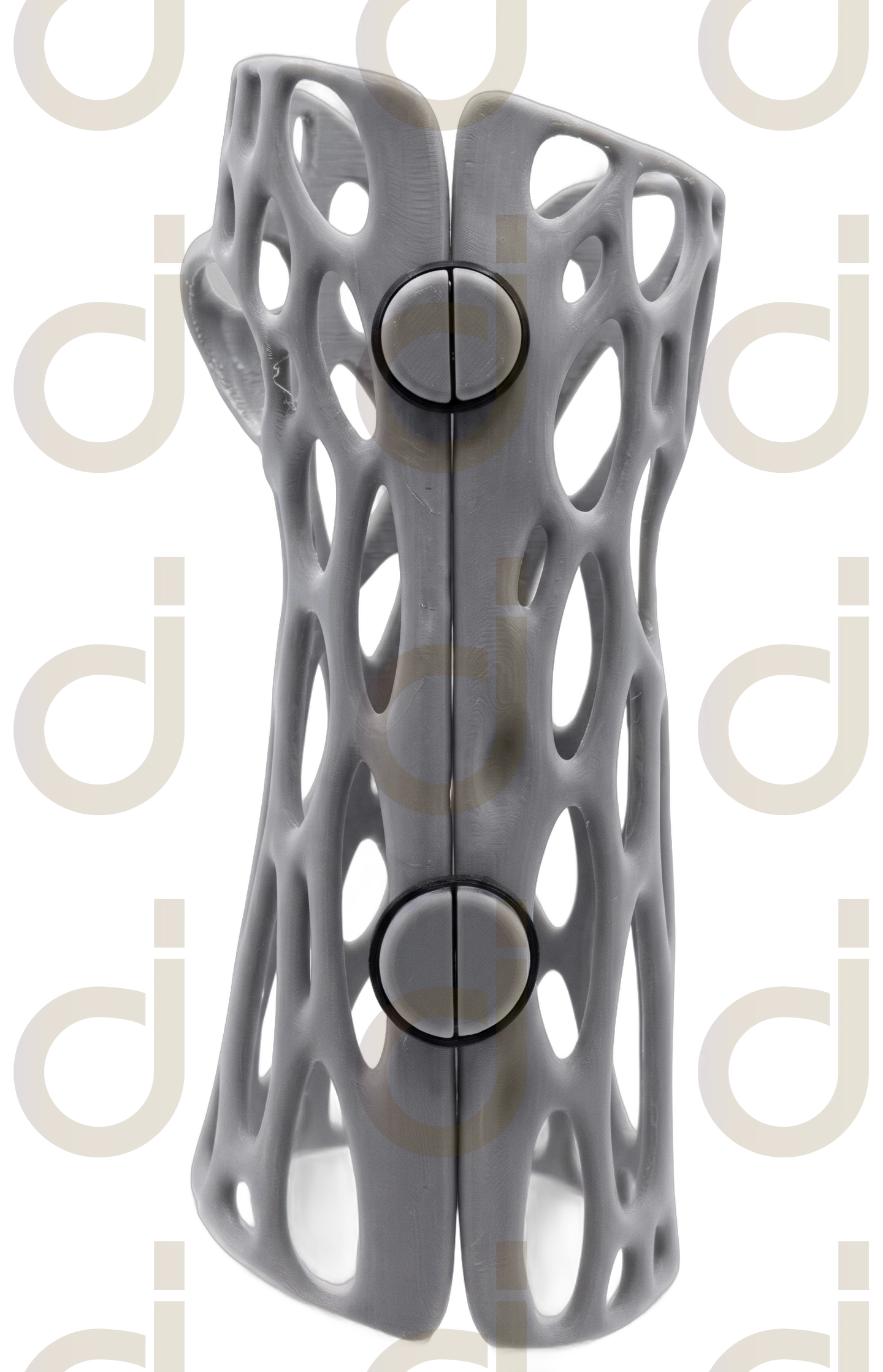
Custom 3D printed wrist splint by Digital Strings

3D printed splints: real personalization, not generic

Unlike plaster or standard thermoplastic splints, a 3D printed splint starts from real patient measurements to create a device that fits precisely, distributes pressure better, and is easier to tolerate in daily use.

What we manufacture

  • Wrist, hand, and finger splints 3D printed to patient measurements.
  • Custom ankle and foot orthoses.
  • Cervical and limb splints with functional design.
  • Combined devices with joints, closures, and postural adjustment.
  • Flat heat-activated splints with patented technology for rapid deployment.

Patented technology Patented

Flat-storage splints that activate and adapt with heat — ideal for emergency kits, first aid, and pre-hospital care in Guatemala and Central America.

Why 3D printing?

Additive manufacturing enables geometries impossible with conventional molds: mesh structures for ventilation, variable rigidity zones, and complex anatomical shapes — all in a single manufacturing process.

Advantages of 3D printed splints over conventional options

When fit, comfort, or use context are critical, the difference is significant.

Weight40–60% lighter
VentilationPerforated or mesh structures
FitDesigned to patient measurements
DurabilityWater and wear resistant

How we develop a custom 3D printed splint

1

Case intake

We gather clinical information: diagnosis, anatomical zone, required range of motion, and use context.

2

Digital design

We model the splint using specialized software with direct measurements or 3D scanning of the patient's anatomical segment.

3

Printing and validation

We print the prototype in the material indicated for the case and review it with the specialist before final delivery.

4

Adjustment and delivery

We make any necessary adjustments until the specialist confirms correct functional fit for the patient.

Common use cases for 3D printed splints

Post-surgical recovery

Immobilization of wrist, hand, ankle, or foot with better anatomical fit and greater comfort during the recovery period.

Soft tissue injuries

Sprains, tears, or ligament injuries where comfort during prolonged use directly influences treatment adherence.

Neurological conditions

Functional support in paralysis, spasticity, or conditions where correct segment posture is therapeutically relevant.

Pediatric patients in Guatemala

Precise fit and aesthetic customization make a real difference in children where device tolerance is a frequent challenge.

Frequently asked questions about 3D printed splints in Guatemala

What is a 3D printed splint?

A 3D printed splint is an orthopedic device manufactured through additive manufacturing from a personalized digital design. Unlike conventional plaster or generic thermoplastic splints, it adapts precisely to each patient's anatomy, resulting in better fit, greater comfort, and reduced weight.

Where can I get a 3D printed splint in Guatemala?

Digital Strings manufactures custom 3D printed splints in Guatemala. We work directly with specialists and patients to design and produce splints adapted to each clinical case. Contact us through this page or write to info@digistrings.com.

Are 3D printed splints more comfortable than plaster casts?

In most cases, yes. 3D printed splints are lighter, allow ventilation through perforated or mesh structures, do not deteriorate with water, and fit more precisely to the patient's anatomy — reducing pressure points and improving tolerance during prolonged use.

How long does it take to make a custom 3D printed splint?

The typical process takes between 3 and 7 business days, including digital design, printing, and specialist review before delivery.

Do you serve patients outside Guatemala?

Yes. We coordinate projects across Central America. For projects outside Guatemala, the design process is handled remotely and shipping or delivery is coordinated according to the scope of the project.
Related devices and services